Some Thoughts After Watching 'You Can See Everything'
A few days ago I watched You Can See Everything, a documentary by Nathan Fielder and Lance Oppenheim about Theranos and its founder, Elizabeth Holmes. If you're curious, NPR's overview is a good place to start.
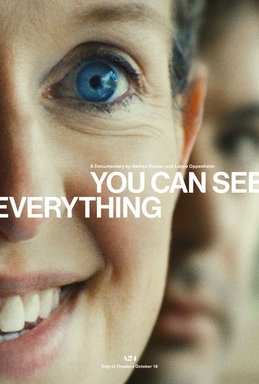
Afterwards I kept thinking about it from a founder's side: what is worth learning from, and what is worth taking as a warning.
1. Trust is the foundation of everything
With investors, partners, users, your team, and yourself, what you say and what you do have to match. In business you can keep your recipe private, but you have to stand behind every word you say. You can fool other people. You can't fool yourself.
2. Vision has to be realistic
Daring to dream big matters, but be clear about it: can you do it with what you're capable of today? How long will it take? And for the part you can't do yet, what fills the gap?
When we set a vision or a to-do list, those questions need real answers: how long the money lasts, how strong the team is right now, how long each thing actually takes. Set the vision from there, and it's one you can reach step by step.
3. Hold the line
Never break the law, under any circumstances. Losing your bottom line is like the Ship of Theseus: one plank replaced at a time, the line lowered a little at a time. No single step is big, but it ends in ruin.
4. Success takes a good team
Trust each other, dare to voice a different view, commit fully, give each other feedback, care about results. A team has to have people who know the field and dare to say "no," and even more, a decision-maker who listens. Beyond ability, ethics and passion matter just as much.
These line up closely with Patrick Lencioni's The Five Dysfunctions of a Team, which draws a team's common failures as a pyramid. From the bottom up: absence of trust, fear of conflict, lack of commitment, avoidance of accountability, inattention to results (The Table Group). Turn each one around and you get the list above.
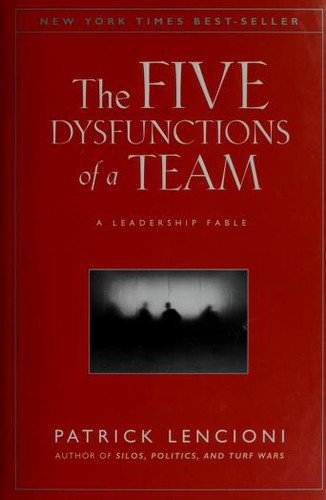
"Voicing a different view" and "giving each other feedback" are easy to blur, but one happens before a decision and the other after. Before the decision, argue about the ideas. After it, hold each other to what was agreed. Without a real argument, people nod along and never fully commit; without a clear agreement, there's nothing to hold anyone to afterwards.
5. Money is an amplifier
When your ability is enough, money amplifies results. When it isn't, money amplifies chaos.
6. Product is king
A story can carry a funding round. Only a product can carry a company.
The film is called You Can See Everything. Running a company doesn't mean letting people see everything, but the part you do show them has to be true.